Resources – Retired
A Natural Infrastructure Plan for the Hill Country
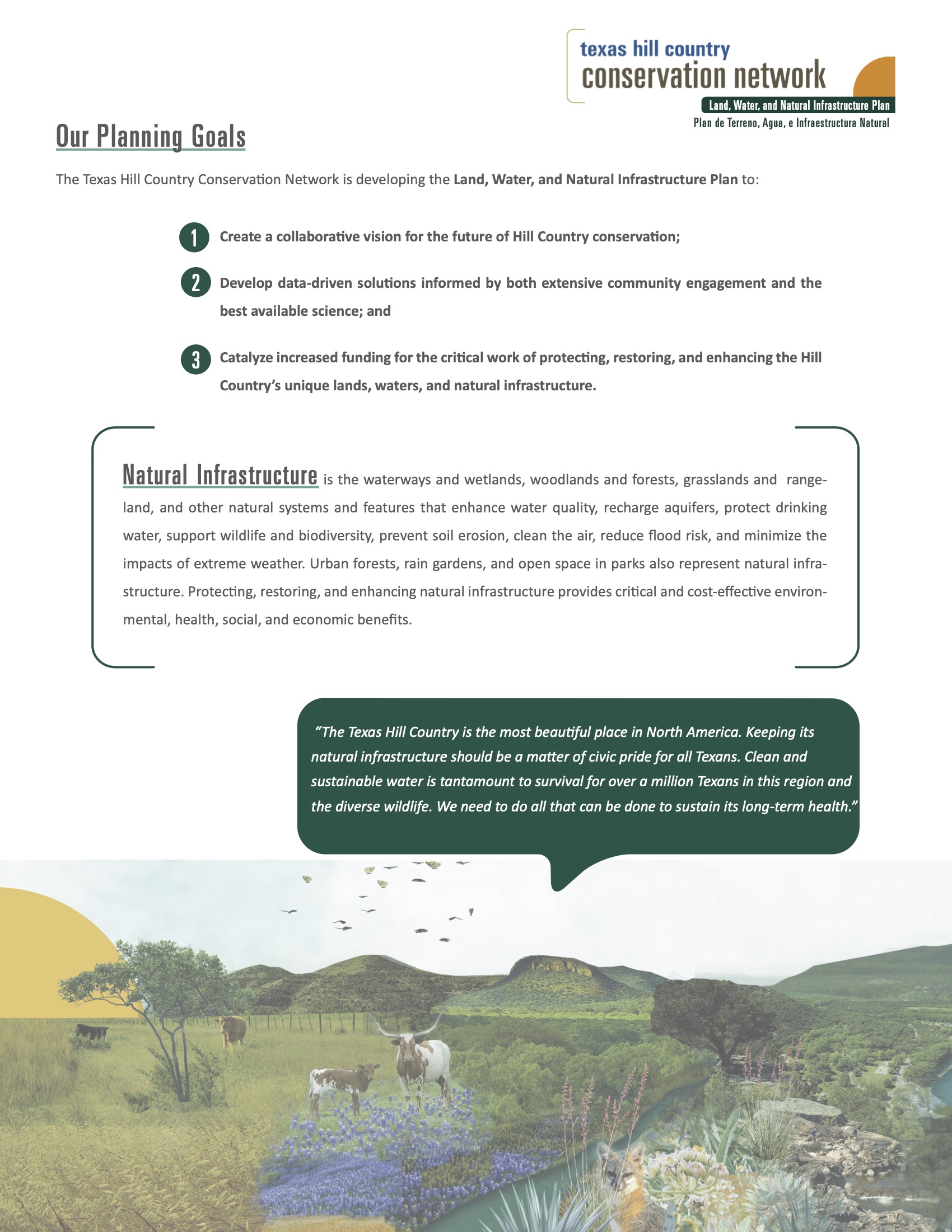
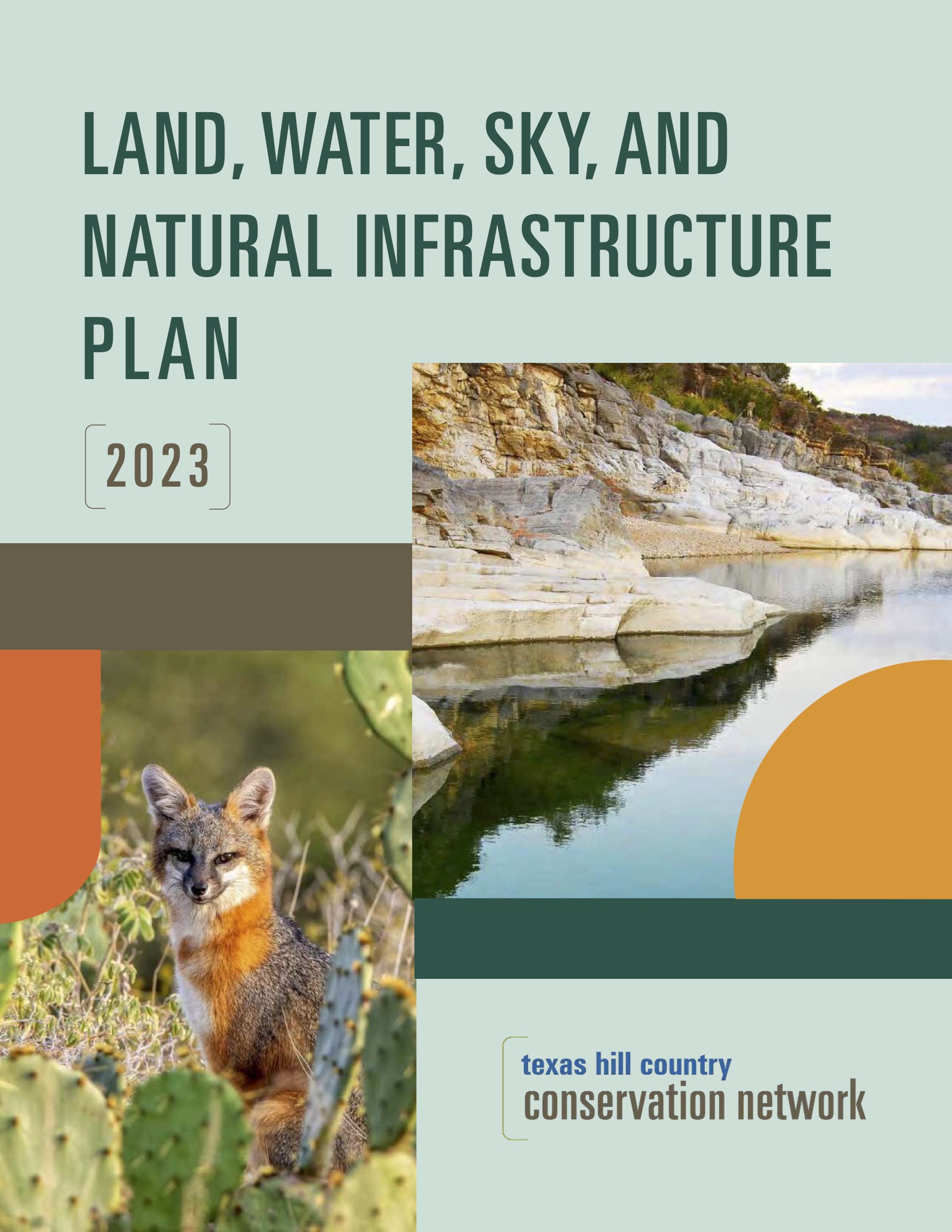
The Texas Hill Country Conservation Network is proud to release the Hill Country Land, Water, Sky, and Natural Infrastructure Plan. This plan includes a shared vision for the Hill Country, collaboratively developed infographics, and objectives & strategies for achieving the Plan’s vision. Through the development of this plan, the Network seeks to steward important natural lands and resources, sustain healthy farms, ranches, and working forests, and expand opportunities for connecting to nature.
Land, Water, Sky, and Natural Infrastructure Plan
The Hill Country Land, Water, Sky, and Natural Infrastructure Plan aims to provide data-driven solutions and priorities for conserving natural resources within the Texas Hill Country and includes a written report, maps, and recommendations for a path forward. The development of the Natural Infrastructure Plan drew from the feedback of thousands of central Texans, including natural resource professionals, residents, elected officials and landowners within the region.
Natural Systems are Vital Infrastructure
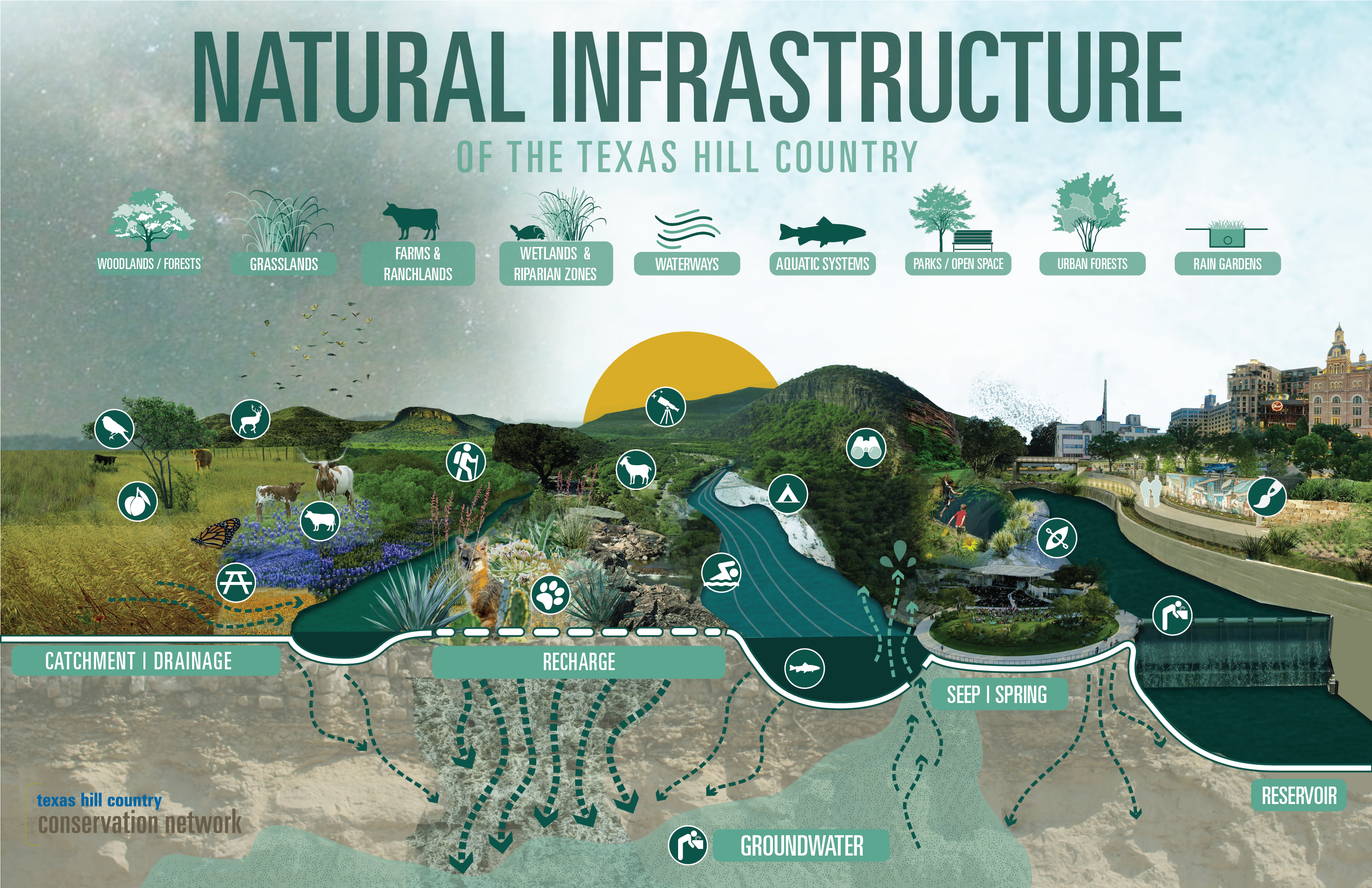
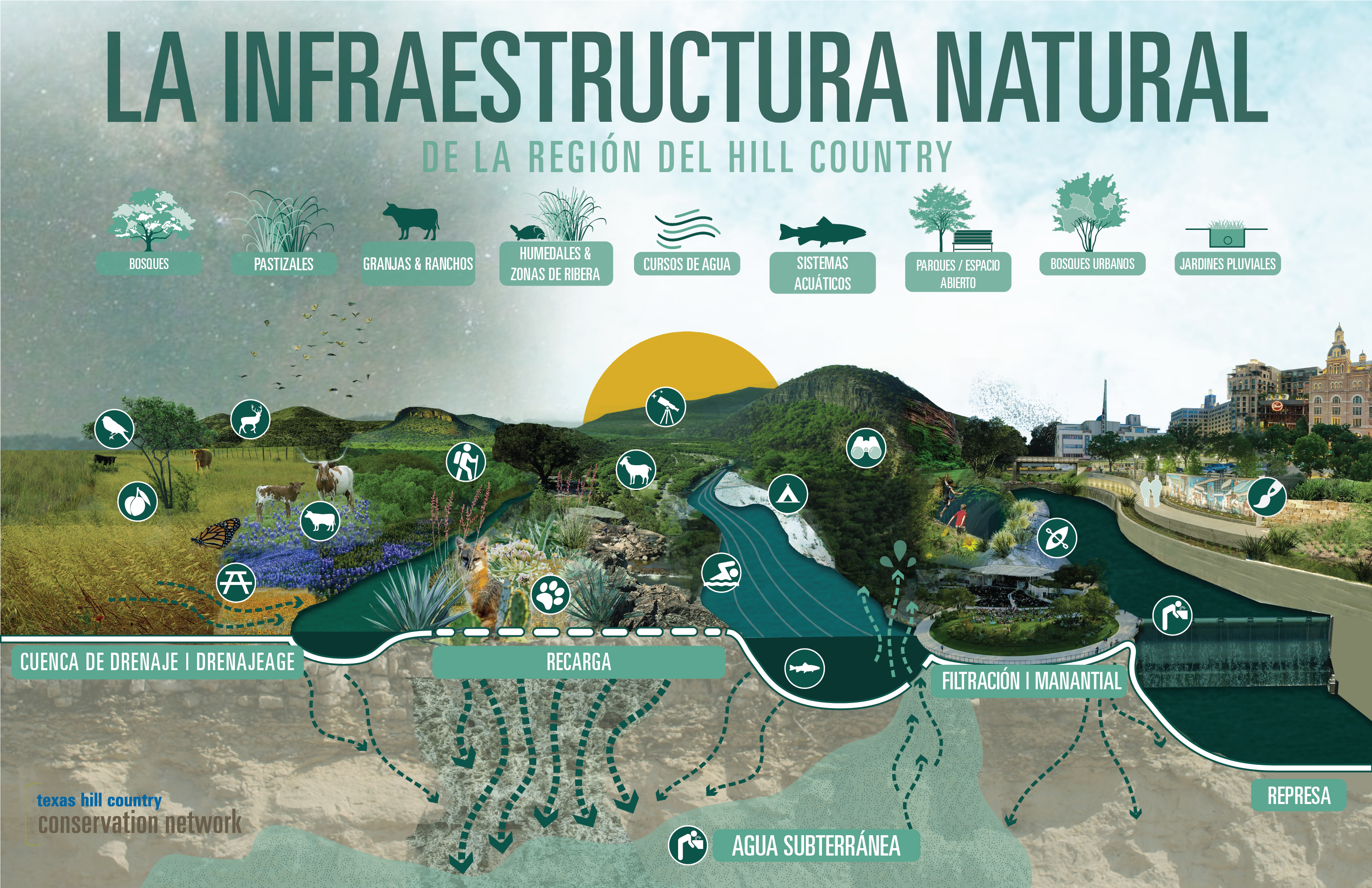
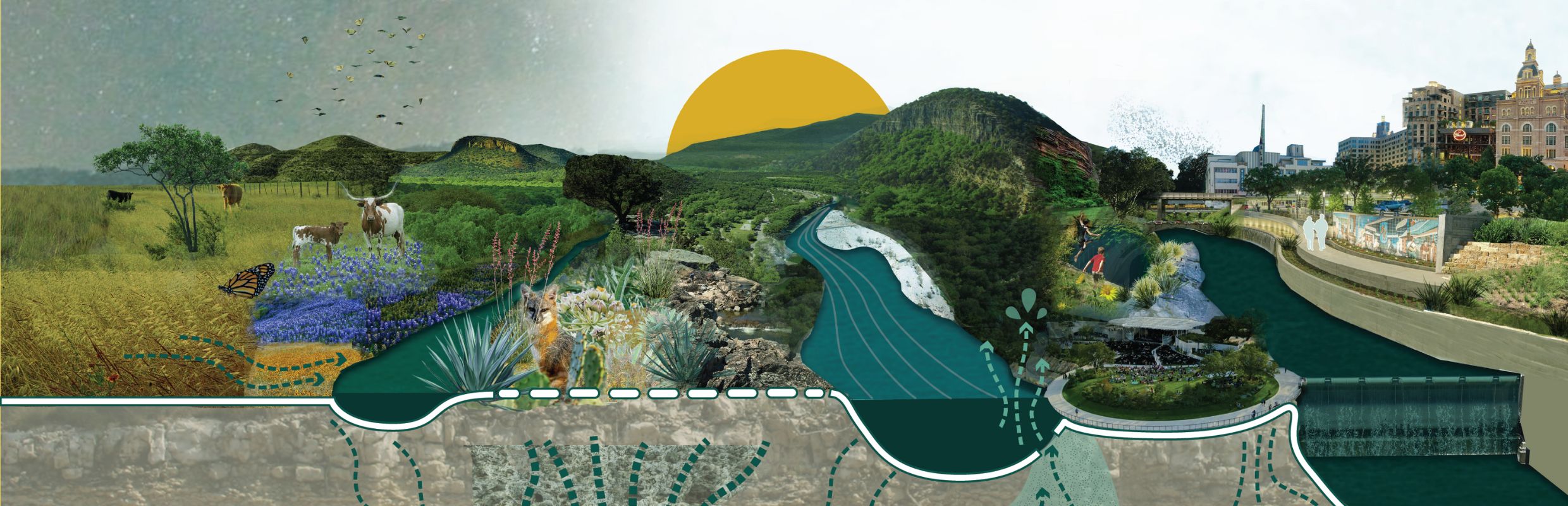
A central theme throughout the new plan is the reframing of infrastructure to move beyond built systems and include the natural systems that sustain Hill Country communities. From rivers and aquifers that provide our communities drinking water to the rolling hills that provide flood mitigation, these natural features provide vital services and protections throughout the region. The Hill Country Land, Water, Sky, & Natural Infrastructure Plan highlights where protection of these resources is most needed, and identifies opportunities for improving recreational access to nature, mitigating urban heat island impacts, and protecting our precious water resources.
Natural infrastructure is the cornerstone of thriving and resilient economies and an essential foundation of community health and safety.
Studies show that for every $1 invested in conservation, $4 to $11 is returned in natural goods and services like clean air and water and reduced risk of flooding. Click to learn more.

Texas working lands provide $629/acre/year in benefits, which totals $89 billion annually across 141 million acres. Click to learn more.
Close-to-home access to green space lowers rates of major diseases and improves physical and mental health—avoiding significant health-care costs. Click to learn more.
Key Takeaways
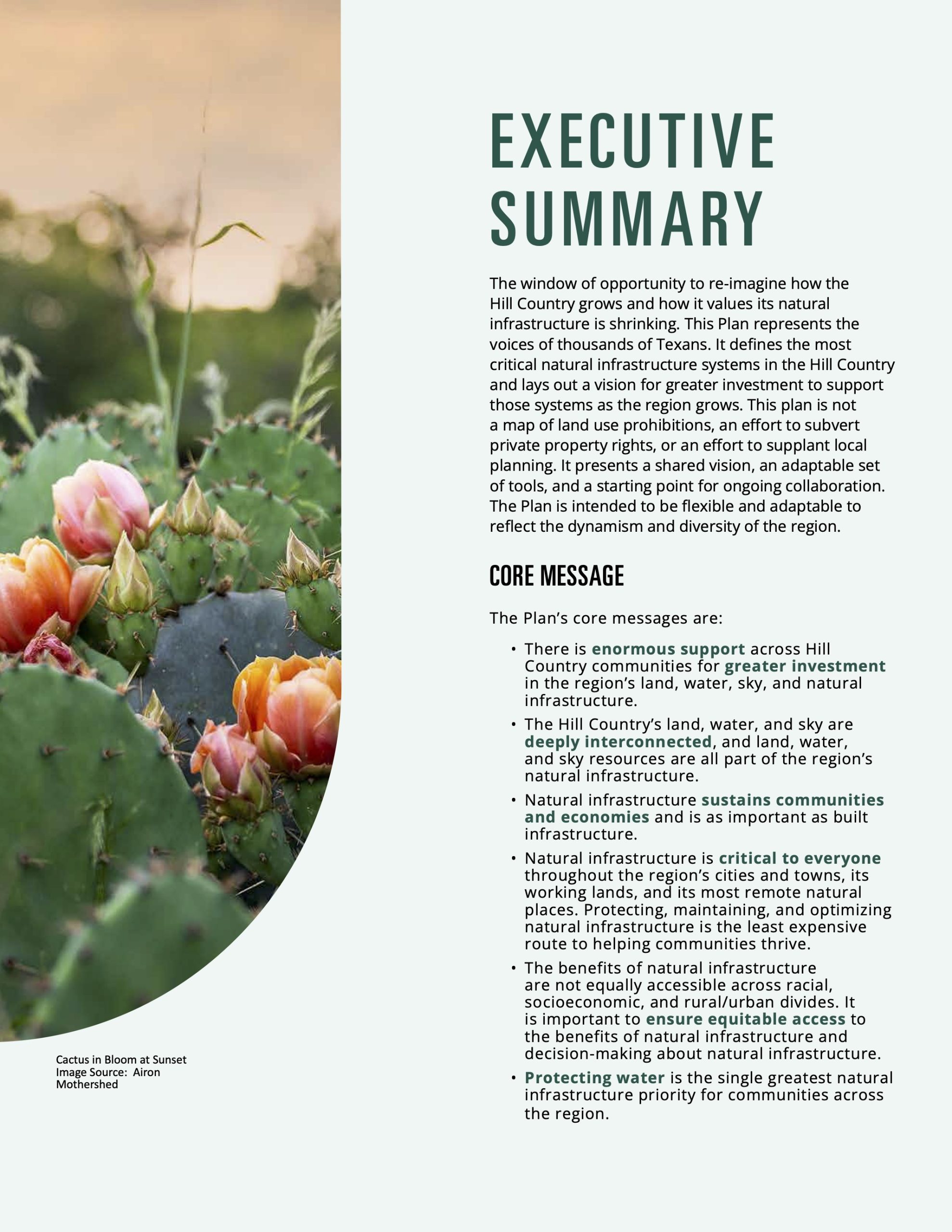
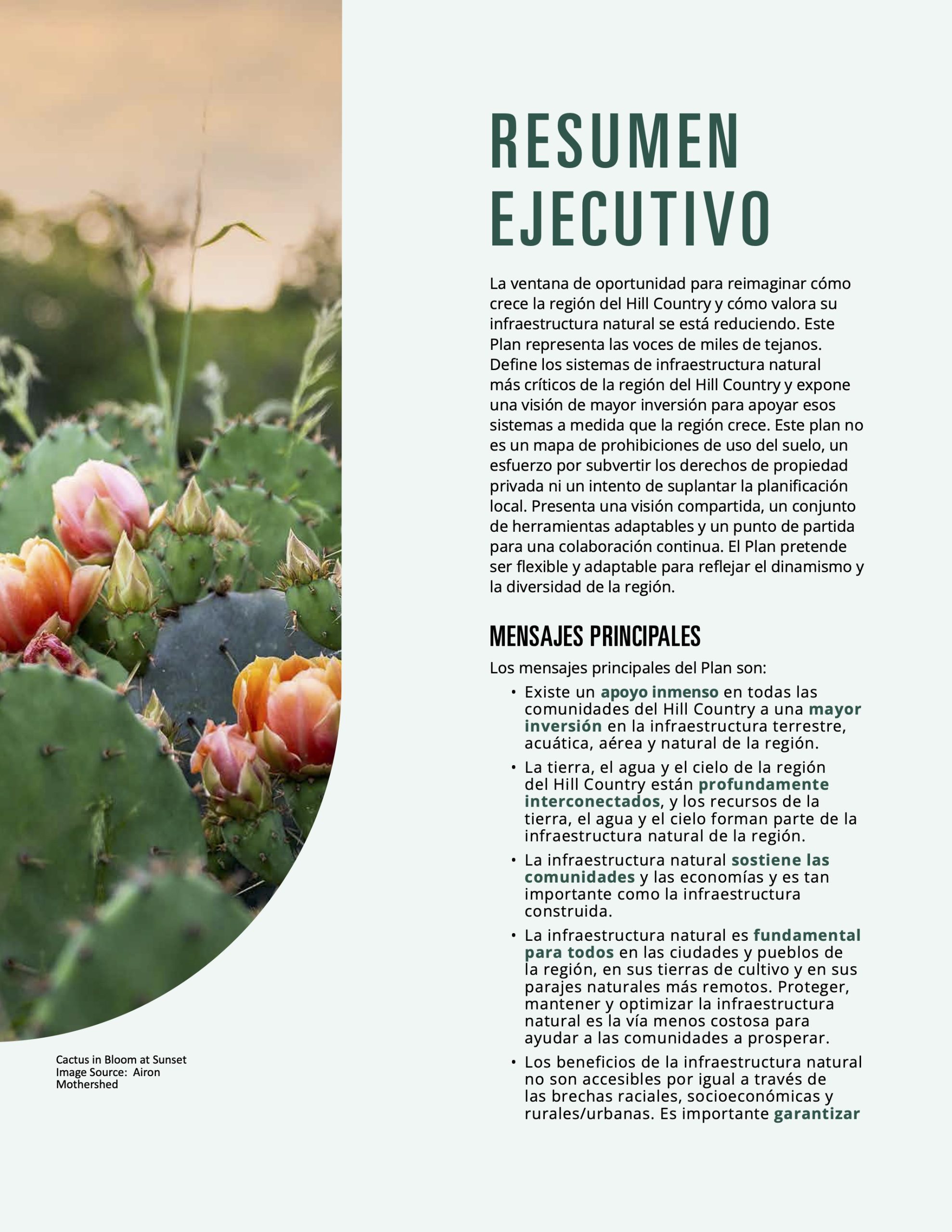
- There is enormous support across Hill Country communities for greater investment in the region’s land, water, sky, and natural infrastructure.
- The Hill Country’s land, water, and sky are deeply interconnected, and are all part of the region’s natural infrastructure.
- Natural infrastructure sustains communities and economies and is as important as built infrastructure.
- Natural infrastructure is critical to everyone throughout the region’s cities and towns, its working lands, and its most remote natural places. Protecting, maintaining, and optimizing natural infrastructure is the least expensive route to helping communities thrive.
- The benefits of natural infrastructure are not equally accessible across racial, socioeconomic, and rural/urban divides. It is important to ensure equitable access to the benefits of natural infrastructure and to decision=making about natural infrastructure.
- Protecting water is the single greatest natural infrastructure priority for communities across the region.
Initiatives, Projects, and Reports
Hidden Item
Water and Equity Report
Water and Equity in the Texas Hill Country
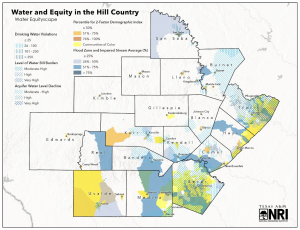 The Texas Hill Country Conservation Network (THCCN) coordinates partnerships working to scale up the impact of conservation-focused organizations in the region. In order to achieve their respective missions, the partnership needed an assessment of water challenges and how these challenges impact Hill Country communities, particularly those communities comprised of underserved or at-risk populations. This report provides a baseline, holistic understanding of where diversity, equity and inclusion (DEI) and environmental justice (EJ) issues intersect with water issues and challenges within the Texas Hill Country, and, further, outlines key findings and defines action items moving forward. Click to explore more.
A data mapping tool is also available through the Texas A&M Natural Resources Institute.
Funders of the report include: Environmental Defense Fund, National Wildlife Federation, Texas Water Trade, Wimberley Valley Watershed Association, The Meadows Center for Water & the Environment, and Hill Country Alliance.
Report written by, and with in-kind support from, Texas A&M Natural Resources Institute.
Source Water Protection Report
 Click to learn more